Honestly, the title of the book "Ang Nawawalang Barangay" (The Lost Neighborhood) is a bit misleading—or maybe it's just a language barrier for me. Even though I am Filipino and have lived in Manila for nearly two decades, Tagalog is not my first language. When I saw the title, I initially thought, "Could this be a fanfic about the mythical place in Leyte called Biringan?"
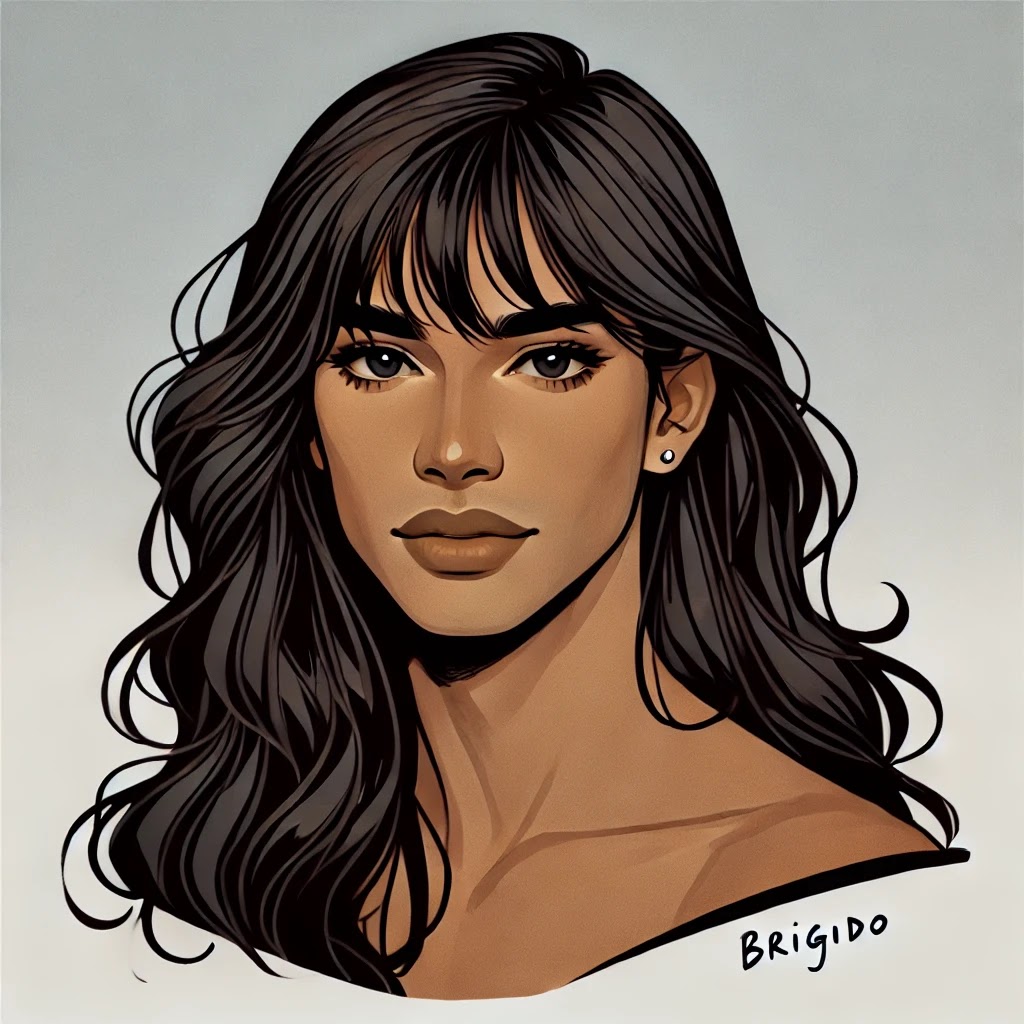
Turns out, it's not. It's not even about looking for a lost neighborhood. Instead, it's about finding the residents of a barangay who suddenly vanish into thin air. Our main character, Bree (real name Brigido), is at the center of it all. I didn’t notice any detailed description of Bree in the book. The only things mentioned are that she has long hair and is gay (something I only figured out after starting the book). Maybe a detailed description wasn’t necessary, since the book includes illustrations that depict Bree as the main character.
The story follows a barangay where its citizens begin disappearing one by one. Bree takes it upon herself to investigate because she feels the barangay officials and local police aren't doing anything about it. During her investigation, she meets Clyde, who becomes her partner in solving the mystery of their missing neighbors—and eventually, Bree's romantic interest (LOL, I accidentally picked up a BL book!).
Their investigation leads them to a local religious cult headed by a transgender person impersonating "Kinkee Balaj," who is described exactly like Nicki Minaj. This impersonator performs by rapping and dancing like Kinkee Balaj, and then gives a homily after the performance. Surprisingly, people fall for it. The cult gains such a large following that when they hold a "Swalla Big Night" (Swalla being the name of the cult), the crowd is as massive as the devotees of the Nazareno every January.
Bree and Clyde eventually discover that people are vanishing because of the heat. When a person reaches a certain temperature, they literally vanish into thin air. The symptoms include sweating, a cloud of smoke surrounding the person about to vanish, and an unexplained coldness felt by those nearby.
As for the ending—well, there isn’t one. It’s an open ending, with no clear resolution and many unanswered questions. But if you look deeper, the ending makes sense within the story’s context.
The novel is not just a mystery or a supernatural thriller; it is a reflection of the unresolved nature of many social and cultural issues that the book touches on. The disappearances in the barangay, for instance, could symbolize how people in society "vanish" or become invisible due to various reasons—whether it's because of economic disparities, the marginalization of minorities like the LGBT community, or the corruption in public offices that allows these injustices to persist. The lack of a clear resolution mirrors the way many of these societal problems remain unsolved, hanging in the air, much like the people in the story who vanished without a trace.
By leaving the story open-ended, the author seems to be emphasizing that not all mysteries in life are neatly tied up, and that some questions—like those Bree and Clyde grapple with—may never be answered. This ambiguity is what gives the novel its weight, making it not just about supernatural disappearances, but also about the many unresolved issues we face in real life. In a way, the story itself vanishes into thin air, leaving readers to ponder over the unexplained and the unresolved, just as Bree is left to wonder about the fate of her neighbors.
The novel is written in Tagalog. Although it's only 200+ pages, it took me five days to finish because reading in Tagalog was challenging for me. Some of the words were so deeply Tagalog that I had to reread entire sentences or paragraphs to fully understand. Honestly, I wish it were written in English so it could reach a global audience. However, the flow of the story fits the Tagalog language. There are certain words, sentences, or phrases that just sound better in Tagalog.
Would I recommend the book? Yes. It’s a good read. It reveals some of the uglier aspects of Filipino culture: how the LGBT community is viewed and treated, the body-shaming of fat people, the corruption of public officials clinging to the rich for power, and how the wealthy actually run the city. It also shows how deeply religion influences Filipino life.
The book also touches on how people cope with the loss of loved ones, exploring themes of mourning and grief. Various social issues are presented in the book, making it worth reading. I don't regret buying it, even though it wasn’t what I expected. Maybe the author left the open ending to make room for a sequel—but even if not, the ending still works as a powerful statement on the unresolved nature of many of the themes it presents.

|
| I asked ChatGPT to draw Bree for me and this is what ChatGPT drew. |